


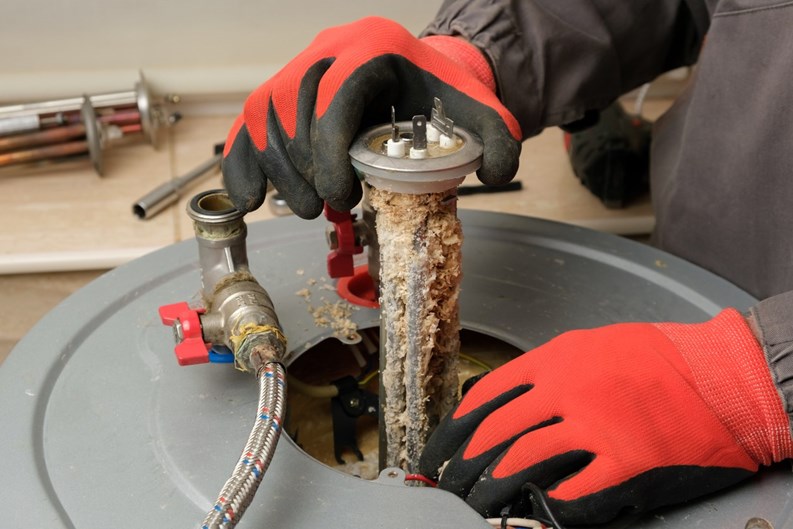
Boilers are often referred to as the heart of a building’s infrastructure—they generate and regulate heat from a central system, keeping interior spaces functional and comfortable. Many pre-war NYC buildings were designed around their boilers, which serve as the main source of heat and hot water, often operating continuously year-round.
Boiler Basics
“A boiler burns fuel, which these days is either #2 heating oil or natural gas, to create hot water or steam,” says Rick Hahn, Division Manager of nationwide engineering and architecture for NYC-based consulting firm The Falcon Group. “The hot water or steam is then distributed throughout the building via mains, risers, and branch piping.”
“If a building has one central boiler that handles the building’s entire heating load, it’ll be designed to operate optimally for the coldest day of the year—around 10 degrees Fahrenheit ambient temperature outside,” Hahn continues. “This can become an issue for older boilers that don’t have the ability to run a low-part load that continuously fires, hits a set point after 10 or 20 minutes, and then shuts down for an hour, which can be a problem from an efficiency standpoint.”
According to Hahn, NYC multifamily buildings typically use two setups: large Scotch marine (or simply ‘Scotch’) boilers, and modular boilers. The Scotch boiler is a large, single high-mass system—a real workhorse. Hahn says that modular systems have the same capacity, but are split into multiple boilers to distribute the load, meaning on autumn days when temperatures tend to vary, only one or two modular boilers need to operate at the same time, rather than one central boiler running at full load.
“A significant problem with the bigger boilers in large buildings is the lack of controllability,” Hahn notes. “Following heating guidelines in NYC, a building owner needs to ensure that the coldest unit is above the city’s heating threshold—and that means other units could be completely overheated.” In many steam and hydronic heating systems, the boiler plant operates to ensure the coldest apartments meet the City’s minimum heating requirements. As a result, residences located closer to the boiler room or on the shortest distribution paths can become overheated if the system is not properly balanced. It’s a tricky balance (and often why you see open windows in units further away from the boiler system).
Proper Maintenance
Because a properly working boiler is so critical to the entire building’s ability to function, maintenance and care are essential. Peak heating season—from October to May in the city—is not the time to start thinking about how your boiler is performing, or scrambling to find a repair person on short notice. Many boilers run year-round, so routine maintenance should be done annually, and then again before ramping up the system for the heating season.
“Inspect the boiler and room throughout the year, checking for any leaks or unusual sounds so you can catch issues early,” says Michael Mintz, CEO of NYC property management firm MD Squared Property Group. “Before winter hits, we try to have all of our boilers cleaned and overhauled to make sure they’re ready.”
“We recommend doing a vacuum overhaul once a year to keep the boiler operating at peak efficiency,” says Brian Abad, senior sales analyst at East Coast Petroleum based in the Bronx. “It helps keep the system clean and spotless going into the heating season.”
“Test the pressures within the system to make sure all of the pumps are operating and hitting the temperature set points, and most importantly, that it’s responding to outdoor temperatures,” adds Hahn. New York requires boiler systems to have an outdoor temperature sensor that modulates the boiler to ensure it doesn’t overfire on warmer days or underperform in colder temperatures, so making sure those controls are operating properly is important.”
Don’t Wait for a Big Break
While it’s tempting to defer maintenance in order to save money (particularly if a system or piece of equipment seems to be running just fine), it’s not an effective long-term strategy. The pros advise boards and managers to be proactive rather than reactive, and all note that the earlier a problem is caught, the easier and cheaper it is to set right.
For example, boiler tubes—the metal pipes inside the boiler that transfer heat—often erode over time due to the high heat exposure. “Many buildings will wait for tubes to erode before making a repair,” says Abad, “but that’s a mistake, because it really decreases the efficiency of the system and increases fuel costs to pump out the same performance.”
Persistently low water levels can also cause problems. Low-water cutoff systems can help by automatically turning off the boiler burner if water levels drop too low, but according to Abad, that’s not a fix. “It’s a simple repair,” he says, “but if left untreated, chronically low water levels can cause overheating in the system” that will eventually damage the body of the boiler and melt metal components.
“Cleaning and replacing filters is a typical maintenance job that can be handled in-house,” notes Mintz. These filters clean out debris, minerals, and other impurities before they have a chance to circulate throughout the system. He adds that checking for leaks is another area that requires regular inspection for optimal performance. “Over time, even a small leak can cause significant damage, so attacking leaks early is always best.”
Installing balancing valves and radiator valves helps make sure that the heat only goes where it’s needed, which extends the life of the system. Hahn notes that “Many older heating systems have fallen out of balance, or never had proper balancing equipment installed at all, relying instead on oversized equipment and long run times to ensure the building meets the city’s heating requirements.”
Smart sensors help optimize heat distribution throughout the building. In addition to balancing temperatures, they can also notify management of any technical issues before failures occur. “Boiler control systems include wireless temperature sensors and boiler room sensors to heat the building more efficiently and alert staff when there are issues,” says Mintz. These sensors are located throughout the building to monitor temperatures and system performance.
“The per-unit cost for some sensors is pretty impressive for the savings they can yield,” says Abad, adding that sensors are great at “getting a beat on the vitals of the system—not just in the boiler room, but throughout the whole building.”
Compliance & Energy Efficiency
Local law compliance—specifically Local Law 97 (LL97), which requires buildings to reduce their greenhouse gas emissions—is top of mind for property managers and building owners. Given that boilers generate so much energy, they need to be considered in any overall compliance plan.
“A lot of buildings had to comply in 2024, specifically ones subject to Article 321 [of LL97],” says Hahn. Under Article 321, HDFC and rent-controlled buildings must upgrade their boiler controls and have their steam systems inspected as part of the local law requirement. “That forced buildings to make some upgrades that they otherwise probably wouldn't have had to before,” he says. “I think that was a good prescriptive pathway to let buildings that might not be the strongest energy performers still be able to comply.”
According to Abad, “The law calculates the building’s carbon emissions based on what type of fuel it burns. Each fuel type is assigned a carbon coefficient—#2 oil has a .000074 emissions score and #4 oil has a .000076 emissions score. Local Law 32 bans the consumption of #4 heating oil in all buildings by July 1, 2027, meaning buildings need to convert their heating systems to a cleaner burning fuel source by the deadline.”
Abad says that renewable heating oils, like Truburn, offer buildings a more energy efficient alternative. “We’ve found it’s one of the best, most impactful pathways to take,” he continues. “Oil is collected from food producers and factories, and it’s refined. It reduces emissions by 74% compared to #2 oil.”
Some buildings are considering retiring oil and natural gas-fired heating systems entirely in favor of going electric. Full building electrification poses substantial challenges, however—both structural and financial. “Electrification can be really expensive,” says Abad. “And many folks are caught between a rock and a hard place where there's not a whole lot of solutions out there that are readily available."
Hahn agrees, and notes that steam buildings looking to go electric are in a tough spot, because both the mechanical upgrades and getting the juice itself can be tough to complete in older buildings. “Converting an existing steam-heated building to an all-electric system often requires costly electrical infrastructure upgrades,” he says. “There's a couple of newer technologies I've seen out there for electric boilers that can take the place of a steam boiler, but it's been kind of slow ramping up with that. The electrical applications tend to work best on the hot water side, but many steam-heated buildings face significant challenges when pursuing electrification and may continue to rely on combustion-based heating systems.”
Hahn also notes that many buildings are moving towards condensing boilers, which are particularly good for buildings that use hot water for heating. “Basically, it extracts as much heat as it possibly can for every unit of fuel burned, whether that's oil or natural gas,” he explains, “but one complicating factor that ties back to routine maintenance is that condensing boilers are ultra-high efficiency. Older conventional boilers usually are around 80% efficient; condensing boilers can do upwards of 97%. It’s a pretty sizable upgrade in efficiency, but maintaining those efficiencies requires regular servicing, and neglected systems can experience reliability and performance issues much sooner than conventional boilers.”
Boiler Budgeting
In addition to all of the above, one of the biggest questions boards ask when thinking about repairs, upgrades, or capital projects is of course ‘How are we going to pay for this?’ According to property managers, just like with maintenance, the best financial plan is a proactive one.
For a boiler replacement, “We generally prepare a three-year capital budget to plan these projects well in advance,” says Mintz. “In emergency situations, we work with the board to secure a line of credit or common charge loan to spread the cost over time.”
For general maintenance, he explains that buildings are placed on service plans to control labor costs and minimize unplanned repairs. Partnering with suppliers to offer level billing or supply financing, when possible, is also a smart strategy. “Additionally, we recommend including a 20% contingency in the budget for major repairs or overhauls to prevent cost overruns,” he adds.
Proactive planning, preventative maintenance, proper budgeting, and keeping energy efficiency in mind will help ensure boiler systems operate smoothly and safely throughout the winter and well into the future.
Kate Mattiace is Associate Editor of CooperatorNews.


Leave a Comment