


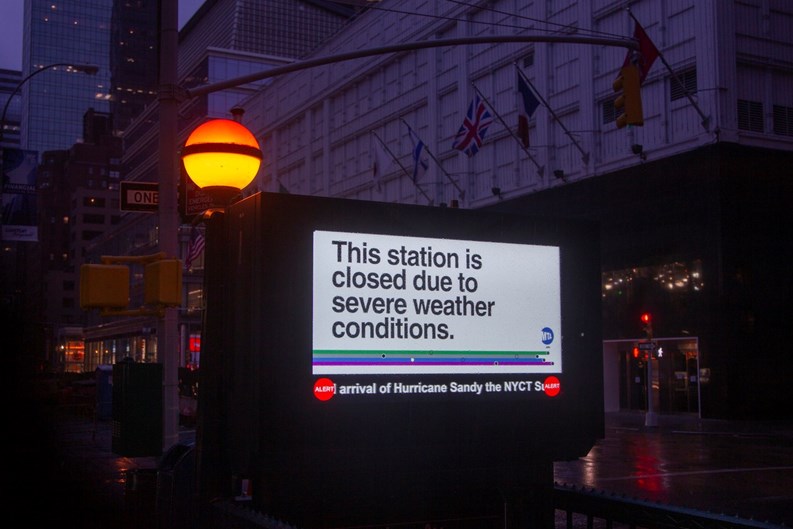
With seasonal storms becoming both more frequent and more intense in the Northeast, the reality of urban flooding and the damage it causes to people and property is something board-management teams can’t afford to ignore. For those overseeing high- and mid-rise buildings, the challenge is uniquely perilous. While residents on upper floors remain dry, operational systems including the electrical vaults, boiler rooms, and elevator pits, as well as ground-floor lobbies and other common areas are all vulnerable to rising water.
All About Barriers
In the scramble to protect multimillion-dollar infrastructure, on-site staff often reach for quick-fix solutions like flood barriers. Yet recent product testing and expert evaluations conducted by Wirecutter offer something of a reality check: no off-the-shelf barrier can truly floodproof a building. While temporary barriers can serve as a helpful line of defense, relying on them as a primary shield carries operational risks.
Consider the humble sandbag, the go-to emergency flood defense barrier for events like Hurricanes Sandy and Ida. Stacking a wall of sand sounds simple enough, but a single entry door requires at least eight 50-pound bags. For a high-rise with multiple entrances, emergency exits, and loading areas, that’s an enormous physical strain on your maintenance staff. Just as critically, resilience engineers warn that sandbags stacked more than three feet high against a building can cause catastrophic structural damage to exterior walls, just from the sheer hydrostatic pressure of trapped water.
And sandbags can pose a risk even after the water goes down. Urban floodwaters often carry a gruesome cocktail of raw sewage, industrial runoff, and municipal waste. Sandbags absorb these contaminants like giant sponges, turning them from barrier to biohazard—meaning they must never be reused. Once the water recedes, facility staff should be equipped with full protective gear including masks, goggles, and heavy gloves in order to haul away the heavy, polluted bags for specialized hazardous waste disposal, and the areas where bags were stacked must be thoroughly disinfected.
Alternatives to Sand
To avoid the sheer weight of sandbags, many property managers have turned to lightweight alternatives, such as water-absorptive polymer bags. Filled with sodium polyacrylate—the same super-absorbent material used in disposable diapers—these flat bags expand when pre-soaked, rising a few inches high to block incoming water. While they’re definitely lighter than old-school sandbags, they do have their limitations. When stacked, the gel-filled bags tend to slide around under the pressure like bags of jelly. Worse yet for coastal cities, polymer barriers aren’t effective against saltwater, rendering them useless if a flood is caused by coastal storm surges. And like sandbags, they also absorb local flood contaminants, requiring the same HAZMAT disposal routine after a single use.
Rigid, fillable plastic tubes offer another modern alternative. Able to be stored flat and inflated on-site with hose water, these interlocking barriers are significantly easier to store in maintenance closets, but they do have to be positioned precisely before being filled, as the tubes become too heavy to nudge into place once they’re full of water. Another drawback is that the filled tubes cannot be stacked higher than about a foot, and water can sometimes sneak around the edges if the seal against the facade isn't seamless.
Preparation is Key
While federal flood insurance programs often reimburse up to $1,000 for emergency barrier supplies and labor, the bottom line is that emergency barriers are only as effective as the broader flood plan surrounding them. Resilience experts emphasize that physical barriers should be treated as secondary stopgaps rather than primary solutions. True flood mitigation begins with proactively clearing your perimeter drainage systems, maintaining backflow preventers, and ensuring that your sump pumps have redundant backup power. For boards, managers, and residents, real security lies in rigorous site preparation and long-term engineering, rather than last-minute deployments.




2 Comments
Leave a Comment