


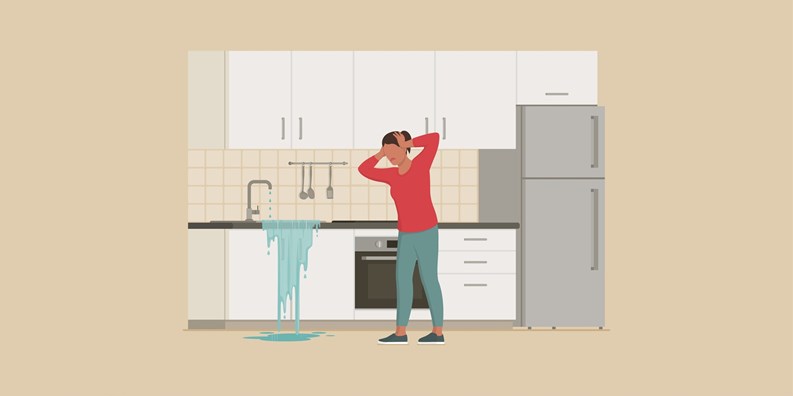
Q. A neighbor in our condo had a pressure test done that blew out our kitchen faucet, causing $20K in water and mold damage. Our 30-year-old building does not have isolation valves installed between the units. Had the neighbor provided notice to the association, we would have shut off our main water valves and avoided the damage.
According to our property manager, the condo's governing docs contain no requirement to notify neighbors or the association before performing this type of test. This was news to us! We've lived here over 16 years and thought the rule was always to notify the association before doing any work that could impact other residents or common elements. The manager has been no help at all, and won't even notify the neighbor of the incident. What is our recourse?
—Who’s Responsible?
A. “There are several ways that you may be able to seek legal and financial recourse,” says RE attorney Ryan Miller of New York and New Jersey-based law firm, Scarinci Hollenbeck. “Under New York law, the fact that the condominium’s governing documents may not expressly require notice before a pressure test does not eliminate potential liability to either the offending neighbor, contractor, or the board. The key issue is whether the neighbor, contractor, and/or the condominium board acted reasonably and with appropriate care in performing plumbing work that foreseeably risked damaging adjacent units.”
New York Condo Law
“In New York,” Miller continues, “condominium unit owners generally have a duty to use and maintain their units in a manner that does not unreasonably interfere with or damage neighboring units or common elements of the condominium building. Courts have recognized that a unit owner may be liable for damage caused by renovations, plumbing work, or negligent maintenance originating from their unit which could result in claims including, but not limited to, claims for breach of contract, breach of fiduciary duty, and negligence. Likewise, contractors performing work in a multi-unit residential building are expected to exercise reasonable care and account for foreseeable risks associated with older plumbing systems.
“Here, several facts may support a negligence claim:
• The building is approximately 30 years old,
• There were no isolation valves between units,
• The pressure test allegedly caused a faucet failure and substantial water intrusion,
• The damage may have been avoidable had the water been shut off beforehand, and
• The contractor and/or unit owner may have failed to take precautions appropriate for a shared plumbing system.
“The absence of an express notice requirement in the condo documents is not necessarily dispositive. Under New York law, a party can still be negligent even where no specific rule was violated if they failed to act with reasonable care under the circumstances.”
Potential Contractor Liability
According to Miller, “The liability of the contractor who performed the pressure test should certainly be explored. A licensed plumber or contractor working in a condominium should understand the risks associated with testing shared or interconnected plumbing systems. You should attempt to determine:
• Who performed the work,
• Whether permits were obtained,
• Whether the board approved the work,
• What pressure levels were used during the test,
• Whether the contractor carried liability insurance, and
• Whether the contractor recommended or considered shutting off the building water supply before testing.”
Potential Condo Board Liability
“The condominium board and management company may also have obligations under New York condominium law and the governing documents,” Miller notes. “Many New York condominium bylaws require board approval for work affecting plumbing and other common elements, even if the property manager now claims otherwise. In addition, boards owe fiduciary duties to unit owners and are generally expected to enforce building rules consistently and reasonably.
“Accordingly, you should formally request, in writing:
• The condominium declaration,
• Bylaws,
• House rules,
• Alteration agreements,
• Renovation policies,
• Board approvals related to the neighbor’s work,
• Incident reports, and
• Any communications regarding the pressure test.
“If the board or managing agent refuses to provide records that unit owners are entitled to inspect under the bylaws or New York law, that itself may become an issue requiring counsel involvement.
Insurance Coverage for Water Damage
“From a practical standpoint, insurance is often the first battlefield in New York condo water-damage disputes. You should:
• Promptly file a claim under your condo insurance policy,
• Ask whether the condominium’s master policy covers any portion of the loss,
• Determine responsibility for deductibles,
• Preserve all remediation and repair invoices, and
• Thoroughly document the mold damage.
“If your insurer pays the claim, it may pursue subrogation claims against the neighboring owner, contractor, or others responsible.
“Finally,” says Miller, “given the approximately $20,000 in water and mold damage, consulting a New York attorney experienced in condominium and property-damage litigation is advised. A lawyer can also send preservation and demand letters quickly, which may be important before contractors, insurers, or the condominium alter records or conditions related to the incident.”






Leave a Comment