



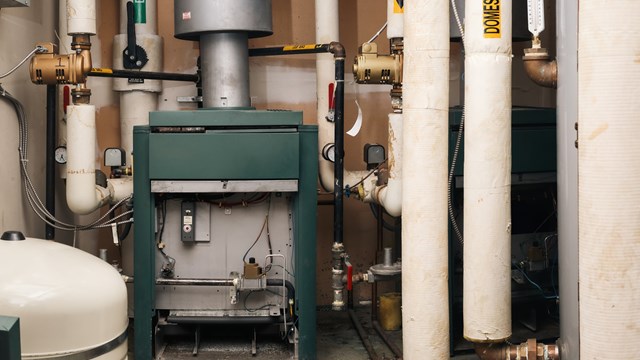
The call came in the middle of an extreme cold snap: the boiler at condo building in Queens had gone down and the building had no heat and no hot water. This property runs on a dual-fuel boiler system that can operate on either natural gas or heating oil. In theory, that design gives you redundancy and flexibility. In practice, a sudden and unannounced change in fuel source—combined with an underfilled oil tank—left the building exposed at the worst possible time.
What happened over the next day is a useful lesson for any board or manager about fuel policy, utility rules, and how quickly conditions can change in the middle of winter.
The Surprise Fuel Switch
This particular condo is what’s known as a “non-firm” gas customer: it gets favorable gas pricing in exchange for the utility’s right to interrupt gas service during periods of heavy demand. On paper, that sounds like a reasonable trade-off. The risk becomes very real, however, when a deep freeze pushes the gas system to its limits.
Without meaningful advance warning to the building, the utility locked out the gas side of the dual-fuel control device, effectively forcing the building to run on oil. The problem was that the system had been operating on gas, as per usual, and no one expected the switch. Oil was treated as a theoretical backup rather than an actively managed primary fuel—so the building’s oil tank was not full.
Once the control box shifted the building off gas, the boiler quickly consumed what little oil remained and shut down in the middle of an extreme cold spell, with temperatures hovering around freezing and below.
From Confusion to Diagnosis
At first, there was an understandable amount of confusion. Residents just knew they were cold, and their normally reliable boiler was suddenly offline. The building team and our management company had to piece together what had happened: why was there no gas, why wasn’t the oil system picking up the slack, and who had made the decision to change the fuel source?
It soon became clear that this was not a traditional “equipment failure.” Nothing had exploded or physically broken. Instead, the external rules of the game had changed. The utility had exercised its right to cut gas, and the property had not been given enough practical information—or lead time—to treat oil as a live, ready-to-go primary fuel source.
This is one of the most frustrating parts for boards and managers. Policy changes, “protocol updates,” and obscure rules often surface only when they cause a problem. It can feel like the city or the utility is keeping the rulebook close to the vest until you discover the consequences in real time.
Restoring Heat in Under a Day
Once we understood that the building had been effectively kicked off gas and forced onto oil with a nearly empty tank, the priorities were clear:
• Confirm the boiler and burner were otherwise functional.
• Secure oil delivery as quickly as possible.
• Get the control system back into a safe, operable mode.
• Communicate honestly with residents about what happened and what to expect.
We immediately began calling oil companies, setting up or confirming accounts, and working through the practical obstacles that always seem to crop up in bad weather. Access to the fill line had to be confirmed and cleared. Drivers needed clear directions and photos so they could find the connection quickly in icy conditions. Meanwhile, our boiler contractor coordinated with management to be ready on-site when the fuel arrived.
From the residents’ perspective, being without heat and hot water for almost a full day is a serious hardship. From an operational perspective, the focus was on compressing that downtime as much as possible. Between coordinated vendor response, on-site staff, and constant follow-up, we were able to turn the situation around in roughly 24 hours and restore full service to the building.
Lessons for Boards & Managers
This episode highlights some important lessons that apply to many co-ops, condos, and HOAs across the city:
• Dual fuel is only as good as your backup. A gas-and-oil boiler sounds redundant, but if the backup tank is empty or neglected, it’s the opposite. Treat the “secondary” fuel as an active, maintained option, not an afterthought.
• Non-firm gas is a risk. Lower gas prices come with strings attached. Boards should understand exactly what “interruptible service” means, how notice is provided, and what the plan is when the switch is thrown.
• Policy changes often surface at the worst time. Utilities and agencies may shift protocols, tighten supply rules, or enforce existing rules more aggressively, especially in extreme weather. Don’t assume that what was tolerated last winter will be accepted this winter.
• Keep tanks sized, full, and tested. If your system can run on oil, make sure the tank is properly sized for your building’s load and kept at a safe minimum level during heating season. Periodically test the system on oil so you know it will run when called upon.
• Prepare for the unexpected. In a city as complex as New York, you cannot predict every new mandate or operational decision from utilities or regulators. What you can do is build resilience into your building: competent vendors, clear access to equipment, accurate contact lists, and a communication plan.
For the condominium owners, the most important fact is that their homes returned to normal quickly, even in the middle of a brutal cold spell. For boards and managers, the event is a reminder that the real world doesn’t always follow the neat logic of engineering diagrams or utility tariffs. The rules can change overnight. The best protection is to assume that they might—and to keep your “backup” systems truly ready to carry the load.
David A. Goldoff is the founder and president of Camelot Realty Group, a licensed real estate broker, and managing agent. He may be reached at dgoldoff@camelot.nyc.




Leave a Comment