


In addition to the obvious danger it poses to public safety, a deteriorating façade also represents a major liability for the building involved. If an incident is deemed to be the result of neglected maintenance, not only does the co-op corporation or condo association have to grapple with its moral culpability in an injury (or worse), it may also be on the hook for thousands or even millions of dollars in fines and damage claims. If the negligence is egregious enough, there may even be criminal penalties as well.
Fortunately, these negative outcomes are avoidable—and the first step is inspecting your façades and everything attached to them. It’s often not a matter of choice; regular structural inspections are often mandated by local government, lenders, and insurance carriers. NYC has a long list of Local Laws around building maintenance, but we’ll focus on two that are of particular importance for co-op and condo communities: Local Law 11 (LL11), and Local Law 126 (LL126).
Nothing Lasts Forever
By definition, building façades are exposed to the elements. While those elements may differ by region and climate, the chief culprit in façade erosion across the board is water. Water infiltration can damage everything from the steel rebar inside concrete beams to the ceilings and walls of individual units, and can lead to structural decay and even toxic mold infestation.
According to Antonio Argibay, managing principal of Meridian Design Associates, with offices in New York and Miami, “Over time, weathering and wear can compromise structural elements, leading to hazards like falling debris. Routine checks help identify issues early, ensuring safety and preventing costly repairs.”
And it’s not just street-facing façades that boards and managers need to concern themselves with. Buildings with adjacent or underground parking facilities have an extra duty to inspect those as well.
Catching Trouble Early
According to Giulia Alimonti, VP at The Falcon Group, an engineering and architectural firm based in New York, “Because of the age of the housing stock in NYC, the most common defect we find is deterioration from exposure to weather year after year. We have hot weather in the summer and cold and wind in the winter. Rainwater and melting snow get into small gaps and then freeze when the temperature drops; since water expands as it freezes, this causes cracking. Year after year, those cracks get deeper and deeper, and if not spotted and repaired as part of a regular maintenance program, they can lead to very unsafe conditions.
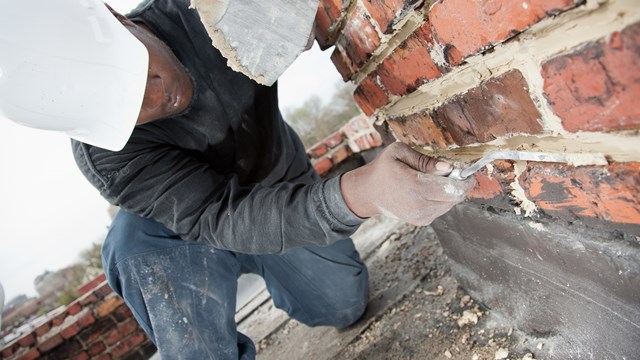
“Many buildings in Manhattan also contain parking structures,” Alimonti continues. “The concrete in these parking structures can get wet right down to the steel. Much like ice, the wet steel starts expanding, and cracks the surrounding concrete. The steel also corrodes, and loses material and strength, which becomes very dangerous.” When assessing a structure for safety, “Inspectors look for things that are out of order,” she says. “Cracks are the number one red flag, along with spalling and discoloration, as well as bulging or missing bricks, leaning parapets—anything that looks like it couldn’t have been built that way.”
Local Laws & Statutory Frameworks
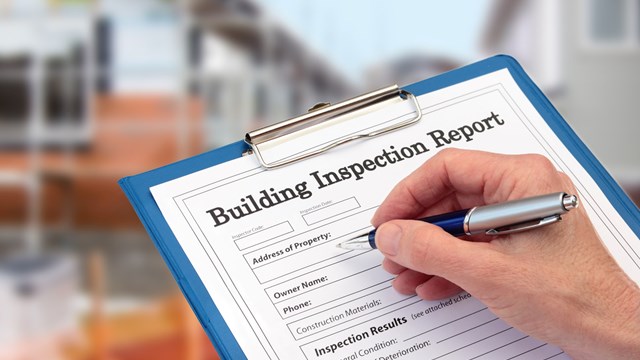
“In New York,” says Alimonti, “required inspections are every five years for facades and six years for parking structures. Façade inspections under the city’s façade Inspection and Safety Program (FISP) must be conducted by a Qualified Exterior Wall Inspector (QEWI)—usually an architect or engineer—and they must generate a report for the Department of Buildings (DOB).” FISP inspections are governed by LL11 of 1998, which requires that all buildings over six stories tall undergo an exterior wall inspection every five years. FISP Cycle 10 commenced on February 21, 2025, and will run through February 21, 2030.
“Reports classify buildings as Safe, Safe With Repairs and a Maintenance Program (SWARMP), or Unsafe,” says Alimonti. “The DOB also requires parapets to be inspected every year, and requires that a report be made available to the Department upon request.”
In reality, the QEWI’s report is actually three: the first is the initial inspection, which is effectively made from street level, nearby rooftops, balconies, terraces, and pretty much anywhere the inspector can walk to, including backyards and courtyards.
“We try to get on rooftops of neighboring properties, and that gives us an overall understanding of the façade and its current condition,” says Alexei Tajzler, Director of Building Envelope for The Falcon Group. “In addition, we have to look at the report from the previous cycle as well, because if there’s anything that’s in those prior reports that hasn’t been repaired, we have to confirm either way: has it been repaired, or is it still present in the building?” Inspectors also carefully assess side and rearward-facing façades.
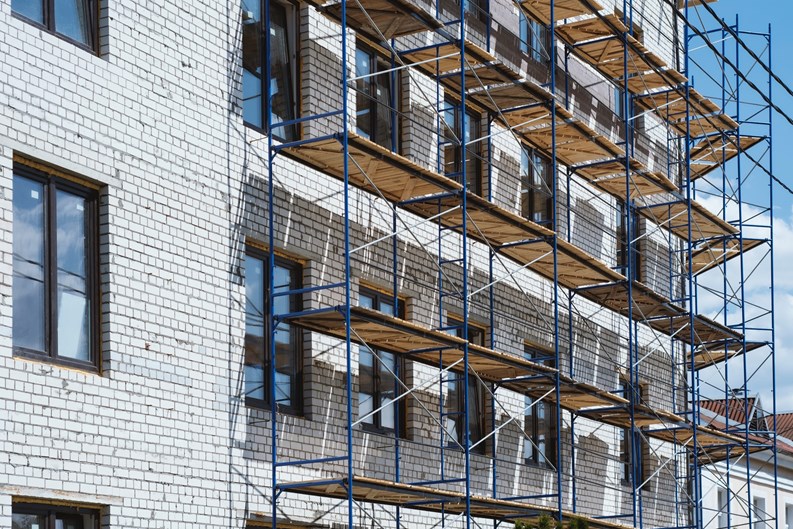
According to Dan Wollman, CEO at NYC property management company Gumley Haft, the kinds of things LL11 inspectors are looking for are displaced, cracked, or broken masonry and bricks, deflection in lintel steel (the strip of steel on the top edge of windows), as well as rust and any other significant cracks or gaps. “You don’t necessarily need a shed or scaffolding for the inspection process,” he says, “but you have to protect within 20 feet of the work area, so if you’re doing anything on the outside envelope of the building, you need to have a sidewalk bridge erected.”
Modernizing Inspections With Tech
Necessary as they are for maintaining the safety of people and property, the increasing number—and rising cost—of mandatory inspections has boards looking for more efficient and affordable ways to meet the requirements of lenders, insurers, and government agencies.
The use of drones has revolutionized the inspection process. Historically, inspectors would use binoculars to scan a building from the sidewalk, and then use scaffolding if they needed to get up close to spot less visible defects. Nowadays, says Jonathan Ehrlich, CEO of T2D2, a software company that uses artificial intelligence to process images captured during façade inspections, “drones provide another level of both efficiency and completeness. Whereas scaffolding may only cover 50% of the building envelope, a drone can capture 100%. Drones can also identify areas that may need to be inspected close-up, allowing scaffolding to be deployed in just those areas.” This saves on the cost of scaffold rental by reducing the amount needed, as well as the time it has to be up.
Artificial intelligence has also streamlined the process, as pros use AI to process images captured during inspections, identifying and classifying the various conditions and issues found. This cuts down the time it takes engineers and architects to analyze inspections and generate reports. “Inspection time can be reduced by up to 90% in certain areas,” says Erlich, “and accuracy is much better compared to an industry-standard ‘binocular inspection’ done from the sidewalk as well—it can be increased by over 200% for some conditions.”
Look Out Below
The City enacted LL126 in 2021, mandating structural inspections of parking structures every six years. LL126 closed a major safety gap left under LL11, which left internal parking garage structures outside its purview. “Because garages weren’t part of the façade, they were almost never inspected before this legislation,” says mechanical engineer Sushruth Keval, EIT, an associate with CTL Group, an engineering, architecture, and materials science firm based in Manhattan. “But I’d say parking garages are equally as vulnerable as façades, and are significantly more important when it comes to total safety.”
This is because the weight and constant movement of vehicles generates continuous fatigue on pavements, columns, and load-bearing beams. Underground garages are also subject to a lot of moisture, says Keval. “And because concrete is porous, it absorbs that moisture. The chemical reactions…eventually cause the concrete to degrade and the steel reinforcements inside to corrode—and this leads to structural compromise.”
Keval notes that “LL126 includes spaces inside as well as under a building, so whether it’s a standalone structure or just a parking level beneath a residential tower, if it’s storing vehicles, it’s covered under the law—with some inclusions and exclusions.
“If a Qualified Parking Structure Inspector (QPSI) declares that a parking garage is unsafe,” he continues, they are required to immediately inform the DOB. At that point, immediate actions must be taken to protect public safety. This could mean fencing off dangerous areas or closing the garage entirely. If the unsafe conditions actually pose a risk to the structural stability of a garage located below-grade, then the entire building should be immediately evacuated.” Keval adds that LL126 rules dictate all repairs must be completed within 90 days of inspection, with an amended report submitted by the QPSI within two weeks of completion.
Implementation & Risk Mitigation
After LL11 or LL126 inspections are complete, conditions identified as Unsafe must be corrected immediately, while SWARMP conditions must be addressed before the recommended report date (and no later than the following cycle’s filing deadline). This means engaging an architect or structural engineer to detail the needed repairs and helping the board develop an action plan.
“Staging and mobilizing these projects is one of the most expensive parts, meaning bridging, scaffolding, permitting, etc,” says Wollman. “You want to try to think ahead and make sure your professionals are setting your expectations at the right place given the age and condition of the building.”
When it comes to structural safety, planning ahead and staying on top of compliance dates and deadlines is crucial. Routine inspections, proactive maintenance, and quick corrections to any issues or repairs can help ensure buildings stay safe, structurally intact, and in compliance with the law.
Cooper Smith is a staff writer/reporter for CooperatorNews.




Leave a Comment