


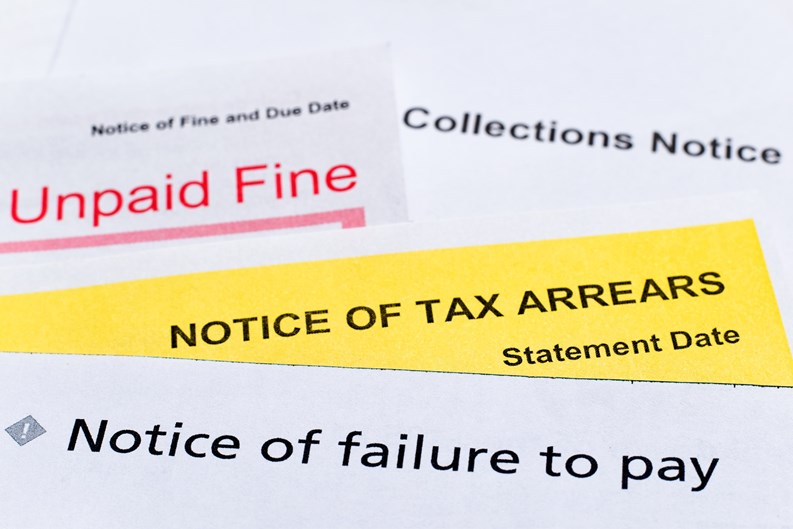
One of the unique characteristics of shared-interest communities like condos and HOAs is their reliance on timely payment of residents’ monthly common charges as the primary—if not sole—income stream from which the building or association’s monthly operating expenses are paid.
Paying the Bills
Unlike a rental property, shared-interest communities run on a zero-sum income and expense model. There are no excess funds collected; a condominium association turns no ‘profit’ from month to month or year over year. While there might be an occasional surplus if expenses fall short of budget estimates (a truly rare occurrence that’s getting rarer all the time), those funds will most likely be rolled into the community’s capital reserves as a bulwark against future special assessments. Importantly, reserves should never be used to cover operating fund shortfalls—which is why it’s so crucial for every member of the community to pay their fair share, on time and in full every month.
Boards have a fiduciary duty to collect dues owed, so it’s also crucial for board members to understand the law and how it supports (and constrains) them in upholding that duty.
The Law & What’s Changed
The most recent amendments to New York State’s Real Property Law (RPL) § 339-aa were signed last fall, and apply to actions commenced on or after October 16, 2025. While the amendments’ aim was to increase transparency and encourage conflict resolution, some legal pros say the changes governing foreclosure for non-payment may cause headaches for condominium boards.
Among other things, the amendments require condo and HOA boards to notify residents in writing at least 90 days in advance before commencing legal action to foreclose on that resident’s unit for unpaid common charges. That notice must state the board’s intent to foreclose, identify the address of the unit in arrears, and specify the exact amount of arrears owed. The notice must also be sent to any other address of record for the unit owner, and be printed in at least 14-point type.
William McCracken, a partner with Manhattan-based law firm Moritt Hock & Hamroff, notes that “before commencing a lien foreclosure for unpaid common charges and assessments, condominium boards must satisfy certain technical requirements. The notice must explicitly state that the board intends to file a foreclosure action to enforce the lien, must specify the exact amount currently owed, and must include the condo’s property address.”
The 90-day notice amendment was intended to protect unit owners from being hit with foreclosure proceedings with little advance warning and potentially losing their homes or receiving below-market value at foreclosure auctions—but, says McCracken, “In my experience, unit owners were receiving ample notice under the prior regime, because association bylaws already required prior written notice. Plus, foreclosure proceedings themselves build in ample procedural protections for unit owners.”
The Practical Effect
As noted previously, condo associations are nonprofit entities; most rely entirely on residents for cash inflow in the form of monthly common charges, transfer fees, and occasional special assessments. Every dollar not collected from unit owners has to be collected from another source; if there aren’t any other sources (like revenue from a commercial parking garage or a ground-floor retail tenant) the association may have to resort to a large assessment to fill the budgetary hole. If there’s more than one or two residents not paying their share, that hole can get deep very quickly—leading to a cascade of problems affecting everyone in the association.
When a unit owner doesn’t pay their monthly condo fees, a formal demand letter is issued by the board’s counsel once the delinquency exceeds the grace period defined in the community’s bylaws. If the owner fails to respond or settle the debt within the allotted time (typically 30 days), the board’s attorney prepares a Notice of Lien itemizing the unpaid common charges, late fees, and legal expenses. The Notice is then filed in the county clerk’s office and secures the debt against the property for up to six years. This is where the updated 2025–2026 regulations come in: the 90-day pre-foreclosure notice must be sent to the owner in arrears after the Notice of Lien has been filed, but before the board commences a formal foreclosure lawsuit.
Once recorded, the lien attaches to the property title, effectively preventing the owner from selling or refinancing the unit until the debt is satisfied and a ‘Satisfaction of Lien’ is filed. If the debt remains unpaid, the board commences a formal lawsuit in the New York Supreme Court to obtain a Judgment of Foreclosure and Sale. If successful, the court appoints a referee to oversee a public auction where the unit is sold to the highest bidder to satisfy the lien.
According to legal pros, there’s a lot to follow up on in the new regulations. So from the board’s perspective, what’s the impact of building another 90 days into the foreclosure process?
“The way this law is written, notice [of intent to foreclose] can only go out after the lien is recorded,” says Chris Tarnok, a partner with Manhattan-based DL Partners Law. “That’s the only time the board can commence foreclosure proceedings. So essentially, we’re looking at 60 days, plus another 90 days for a board to enforce their governing documents to collect outstanding arrears. That’s 150 days. Once 60 days pass, there’s a default and the lien amount includes the present outstanding balance due, plus future unpaid amounts. Boards must act very quickly now, because they’ll have to wait five months at a minimum before they can enforce their association’s rules.”
For less proactive, more avoidant boards, the new regulations may make a bad situation worse, says Jonharold Cicero, also a partner with DL Partners Law. “Some buildings are very quick to send out a notice of default,” he notes, while “others are more relaxed. It’s a matter of collections versus operations. The larger the outstanding balance becomes, the bigger the issue. It just leads to a bigger gap in required funds. Association boards must know how to cover their expenses. Are they pulling from reserves to cover the difference and replenishing [the reserves] upon collection? Under the new rules, that process in court can only start five months after the default, and the proceedings can last months—or years. If it's a small association, the impact is felt very quickly.”
Cicero continues, “In many cases, the board is not likely to foreclose, but rather to attach [a lien] to make sure there is repayment upon the sale or refinancing of the unit. This time limit hinders the available remedies. Coinciding with this change, Fannie Mae—the Federal National Mortgage Association—adopted [rules] that go into effect after January of 2027 requiring that 10 to 15 percent of an association’s budget go toward its reserves. You must have this 15 percent of your annual budget in reserve. It will result in larger assessments and impacts smaller buildings more. Boards must plan for this.”
Unintended Consequences
In the immediate term, the new legislation will likely result in boards sending out arrears notices earlier and more often than they used to, in order to protect themselves from potential cash flow crunches.
“Because these new rules have specific technical requirements, I think this new legislation is likely to spur less leniency and more standardized practices in sending out statutory notices,” says McCracken. “Common charges liens are absolutely an effective enforcement tool, though they’re not without their limits. One thing that condo boards often learn, to their chagrin, is that common charges liens are subordinate to mortgage liens, and it’s often the case that common charges liens get wiped out in a foreclosure process instituted by the lender. For this and many other reasons, it is always preferable to leave lien foreclosures as a threat, and not a solution.”
“The intention of the new regulation was an additional layer of protection for unit owners,” says Tarnok. “The overall position though, is preventing associations from immediately proceeding with foreclosure of a unit whose monthly charges are in arrears.”
Cicero concurs, adding that “these protections are for the unit owner, not the association. The original regulation created the basis for how to file a lien and give it priority. The new amendment, 339-aa, sets forth how it can be enforced to protect unit owners from overzealous boards, but in my experience, it’s the exact opposite; most boards let [arrears] go for far too long. They really cut slack to members in arrears, for longer than they should. This amendment may be more political posturing than anything else.”
According to Tarnok, “It’s interesting to look at this from two directions. Courts generally respect board decisions, letting them operate under the business judgement rule. The legislature changed the law. Now we have this new law which restricts a board from doing what it needs to do to operate its property efficiently. The problem we see is not aggressive boards, but boards who want to do the right thing, trying to work out problems with their association members. An association board that enforces its rules is just doing its job. That’s not aggressive—it’s a board operating as it should.”
Vigilance is Necessary
What effect does the new law have on conventional strategies like payment plans and other negotiated solutions for dealing with arrearages?
“They’re all still in play, but notice must be sent out [to owners in arrears] in accordance with the statute,” says Tarnok. “Boards should not refrain from sending out notices; that starts the clock. Frankly, notice now becomes crucial. Courts won’t care about negotiated settlements, but about compliance with the rules for sending out notice as per 339-aa.”
McCracken agrees, and advises boards that “sharing clear and transparent arrearage policies with your community can go a long way toward avoiding problems before they arise. At one level, the arrears policy is already in the governing documents, which require boards to pursue payment.”
Condo associations are governed by their documents, and by applicable law. Boards are bound by those rules, and by their own fiduciary duty to their community and everyone who calls it home. When a member of the community fails for whatever reason to uphold their part and falls behind with common charges, there’s only so much a board can actually do beyond sending a firm reminder that timely payment is expected, and then moving forward with collections, liens, and ultimately foreclosure if payment is not made. The amendments to state law around how this process is initiated and communicated to unit owners means that boards must be even more alert and proactive around arrears in order to avoid funding gaps and hitting owners in good standing with assessments. “The community needs common charges collected in a timely manner for continued building operations,” Tarnok concludes. “When someone doesn’t pay, everyone else may have to pay more.” And that alone is a good reason to act promptly.
A.J. Sidransky is a staff writer/reporter for CooperatorNews, and a published novelist. He may be reached at alan@yrinc.com.






Leave a Comment