


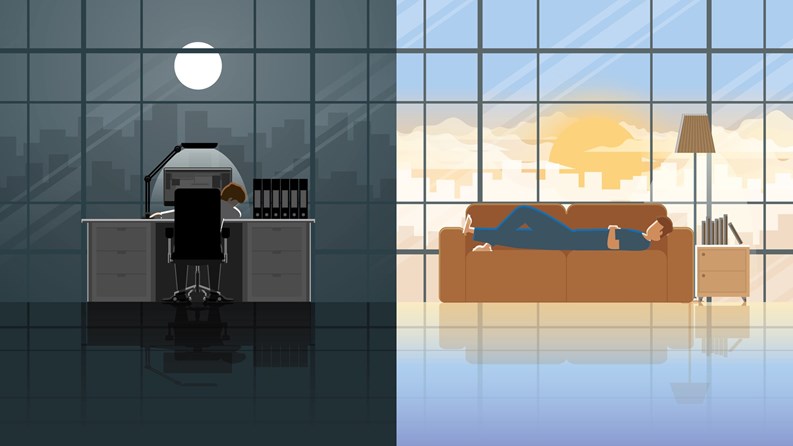
NYC is forever changing and evolving; Lower Manhattan was once a small village, after all, and Harlem a vast swath of farmland. More recently, shifting economic realities, the advent of AI, and the COVID pandemic have changed the way city-dwellers work, as well as workplaces themselves.
Thanks to the pandemic and other factors, office properties in all of NYC’s commercial submarkets have been experiencing soaring vacancy rates for several years now, while at the same time the city’s affordable housing crisis has only worsened, and is now more acute than ever. This convergence is leading many office property owners to consider shifting their buildings to residential use.
The Future is Here
‘Adaptive reuse’ is the practice of converting unused commercial space into much-needed residential space. Such conversions aren’t uncommon, particularly in Lower Manhattan as the Financial District has shifted from a 9-to-5 business hub to a 24/7 residential neighborhood. Notable Downtown office-to-homes flips in recent years include 70 Pine Street (aka the AIG Building), which was converted from Class A office space into 600 luxury rental apartments after the financial crisis of 2008. In 2017, the former office building at 180 Water Street was transformed into 573 market-rate rental apartments; in 2023, the Art Deco tower at 1 Wall Street directly across from the New York Stock Exchange was converted into 566 luxury condo units.
As the trend accelerates, the picture of what types of office properties are most likely to be converted to residential use is quickly emerging.
“Cities are experiencing [office-to-residential conversions] because there’s a significant number of Class B and C office buildings becoming vacant” says Mark Aloia, partner and chair of the real estate practice at Manhattan-based law firm Tarter Krinsky & Drogin. “At the same time, we have a true housing crisis, with the lowest vacancies in history. The notion of unused space has become something that local governments can’t ignore, as people struggle to stay housed. Outside New York, we’ve seen similar conversions in Chicago and DC now as well.”
Past the Pandemic
Changes to work habits and workplace resulting from COVID were not the only factors driving the increase in office vacancy. “Large developers are building beautiful new offices from the ground up,” explains Aloia. “We’ve seen this firsthand. If a large institutional tenant must choose between the Class B space that it is in, or relocating to a modern new building, it will go to the new building. This has created more pressure on the Class B/C office market, which was already impacted by COVID. Lenders kicked the can down the road for about a year, but we’ve now seen a lot of buildings work their way through the system into foreclosure. With the current discounted price, a developer might have incentive to take an old building and convert it to a more competitive use.”
How Hard is It?
One major concern for developers is how to convert space laid out for offices, which often give little or no thought to sunlight, to residential designs where natural light is a crucial component. There are other considerations as well, such as the need for multiple plumbing risers, elevators, and HVAC systems also not typically integrated into office construction.
Legal constraints are another looming roadblock, though “That’s only part of the problem,” explains Aloia. “However, The City of Yes reforms under Mayor Adams have really made a difference. They dispensed with time-consuming required hearings. Time lost on legal red tape is one roadblock, but the physical building is another. If, let’s say, apartments will trade at $400 per square-foot, the developer needs to hit below that mark with its cost to make a profit. It’s the price less the cost of construction and profit. With office buildings that are either expensive to convert, or are situated without sunlight and therefore not as marketable, there are fewer buildings to choose from for conversion. Then you have to consider that you are building in the middle of a downtown office market” which may not have the kinds of off-hours retail, dining, and recreational spaces a neighborhood needs in order to be attractive to prospective residents.
Own or Rent?
To date, most office conversions in NYC have been primarily into rental properties, in no small part because there are tax incentives for the developers of rental buildings that are not available to comparable condominium properties. As the current glut of units in the condominium market is absorbed and that market stabilizes at all levels however, we may see an increase in the number of B-class office buildings converted into condominiums rather than rentals. Of course, other factors such as the location of the building, available views and access to existing retail infrastructure nearby will be a factor in this process.
New York’s office, retail, and residential market segments are in a state of flux—one that’s expected to continue for some time. While the conversion of office properties is one weapon in the war against our housing shortage, it’s too soon to know, or even project, whether the current attempts will represent a long-term trend that can resolve the twin challenges of office vacancy and apartment shortage.



Leave a Comment