


NYC’s landlords, co-op shareholders and condominium owners are seeking innovative ways to reduce their carbon emissions and improve the energy efficiency of their buildings. As prime energy-users, heating ventilation and air conditioning systems (HVAC) are a prime target for energy audits and potential upgrades, overhauls, or outright replacement.
Most multifamily apartment buildings in the city provide heat through a common hydronic based system, while air conditioning is delivered separately by individual units. Conversion of these systems to a unit-based, self-contained heat pump system is neither easy nor convenient. In the end, the question is whether a) the property’s physical infrastructure can support the new system, b) there is enough available power to support the new equipment and c) whether or not the conversion is worth the cost and inconvenience.
Can it Be Done?
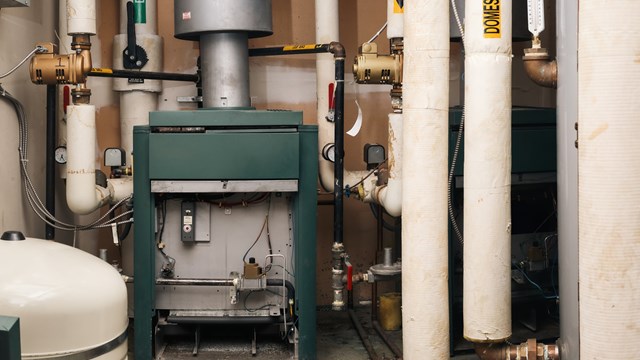
The first and most obvious question is whether your building’s physical infrastructure can in fact adapt to a heat pump conversion. Many if not most residential buildings in New York City provide heat through steam pipe systems that run off a boiler and deliver heat through radiators, while A/C is delivered in a variety of ways—usually window units, through-the-wall units or some type of central air. At minimum, converting to apartment unit heat pumps for both involves removing the radiators and capping the pipe systems leading to and from them.
Pros & Cons
“Decommissioning an existing boiler and radiator system and installing a heat pump system is no small matter,” explains Douglas Weinstein, senior vice president for operations for AKAM, a management firm with offices in both New York City and South Florida.
“The main benefit is that heat pumps are exclusive to the individual units, instead of a central system,” he says, “and are considered more eco-friendly as they don’t require fossil fuels. If a central system goes down—say the boiler crashes—you have no service, buildingwide. If a heat pump breaks down, only a single unit is affected. That’s a plus. On the other hand, heat pumps are electric based, so in the event of a blackout, the whole building would be affected. One serious problem with installing heat pumps is that the units require fresh air input. If the building does not have provisions for that, you have to cut into the exterior envelope in every unit for additional air intake.”
Another concern is that the installation for heat pumps requires new electrical conduits throughout the building, which may require cutting into someone’s unit to create space for new risers. An additional consideration is that cabinet dimensions from radiators to heat pumps are different, and may interfere with individual built-ins in specific units. Installation may mean disturbing built-ins in those units.
Speaking of Electric Power
Yet another major consideration is whether your property has access to the level of additional electric power required to operate the heat pumps. Weinstein explains that “The first step is to have a load study done, a cooling and heating study. The building must have enough electrical power to run the new technology. Typically, older buildings do not have enough power. The local utility, in the case of New York that’s ConEd, must upgrade service to the building and that level of service may not be available from the street.” Without the electrical upgrade, conversion would not be feasible at all.
While the idea of individual unit HVAC may be very appealing, all the stars have to align to make it practical. If you’re considering this move in your own building, consult with the right professionals to determine if you're in that constellation.





Comments
Leave a Comment