


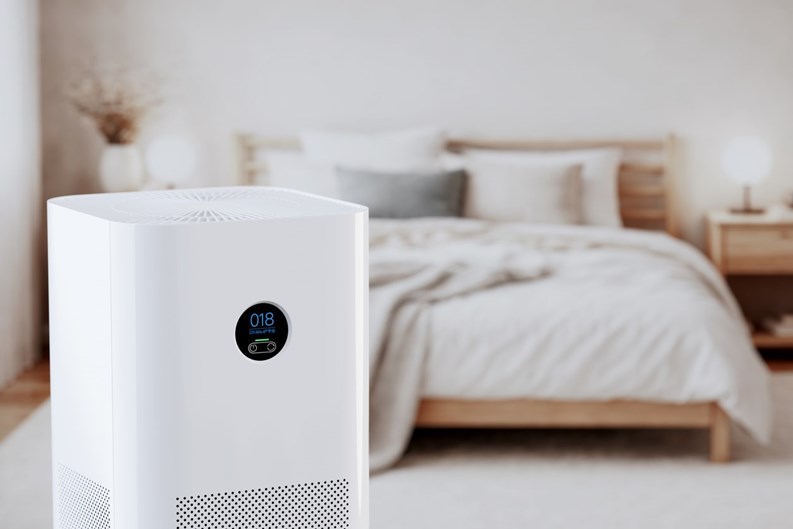
Few would disagree that both the air we breathe in our homes, and the energy efficiency of those homes themselves matter—one for our own health and the other for the health of our planet.
The majority of multifamily residential buildings in NYC were designed and constructed at a time when less focus was placed on energy efficiency. Indoor/outdoor air exchange was an accepted component of building construction and apartment living; you regulated the temperature in your apartment by opening a window. All that has changed. Modern emissions regulations require building envelopes to be practically airtight. That may conserve energy and cut costs, but it also raises issues around air quality. In the race to lessen our buildings’ impact on the outside environment, are we compromising the one inside?
The Positive & The Negative
Building air flow can be characterized as either positive or negative. Positive pressurization in buildings occurs when a HVAC system pumps more outdoor air into a facility than it exhausts out, creating an internal air pressure that’s higher than the atmospheric pressure outside. This blocks drafts, keeps pollen, dust and other pollutants out, and improves overall indoor air quality.
Alternatively, negative pressurization occurs when an HVAC system removes more air from a space than it supplies, creating a low-pressure vacuum effect. Because air naturally moves from high-pressure areas to low-pressure areas, this imbalance pulls air from outside, as well as surrounding hallways and wall cavities inward through any open doors, windows, cracks, and gaps wherever the building envelope has been ineffectively sealed.
Clearly, this isn’t good. The HVAC system in a negative-pressure building has to work much harder to heat or cool the unconditioned air constantly leaking inside—which of course leads to higher energy costs. In addition to that, the negative effects of negative pressurization include an increase in moisture and mold as outside air and humidity backdraft into the building. The strong low-pressure vacuum effect can also pull dangerous combustion gases like carbon monoxide backward into living spaces.
How Ventilation Systems Work
“The main component in effective ventilation is the need for exhaust,” explains Richard Hahn, New York-based division manager for The Falcon Group, a national engineering and consulting firm with offices throughout the country. “In every apartment unit, you have an exhaust in the bathroom and the kitchen. Because you don’t want to create negative pressurization, you supply fresh air through the corridors to positively pressurize the building. If you negatively pressurize, you bring air in. Effectively, you are pulling in cold or hot, more humid air. To prevent that infiltration and its negative effects on energy efficiency, you offset these effects by providing outside air to corridors, which then migrates into the apartment units to offset the exhausted air.”
Drew Maggio, technical director at Highmark Building Efficiency, a company supporting building decarbonization, electrification, and cost savings in New York City, notes that “modern mechanical codes require sufficient fresh air to be brought into occupied spaces. If your building is especially old, you may need to intentionally open windows, say once a day, to ensure proper ventilation.” Clearly, that approach is completely antithetical to energy efficiency requirements.
Along that line, Hahn points out that older buildings are entirely reliant on ventilation systems to bring in air and take out exhaust. “Those buildings depended on that air exchange,” he says, “and with envelope sealing, it’s not happening. It’s very expensive to modernize and air-seal a façade in an older building today. Regardless, we can’t accomplish by correction in older properties what we can do today in new construction.”
Sick Building Syndrome & Other Creepy Effects
The unfortunate results of this collision of energy efficiency and air exchange systems range from having to smell your neighbor’s fish fry from four floors away to actual health risks.
“Odor migration is a huge problem in multifamily buildings,” notes Hahn. “It’s an exhaust issue. Either the exhaust systems aren’t working correctly, not pulling air out of kitchens and baths, or fresh air is not supplied at a high enough rate, so systems are pulling from anywhere they can. Odor migration results from imbalance or not enough fresh air in hallways. It’s important to make sure the system is working everywhere throughout the building.”
On the other end of the spectrum, sick building syndrome (SBS) is a medical condition where people experience acute health problems and discomfort linked to a specific building, though no single diagnosable illness or specific cause can be identified.
According to Maggio, “Sick Building Syndrome is not one particular condition, but a term used to describe the chronic exposure to indoor air pollutants. To avoid sick building syndrome, boards and managers should make sure any construction projects on or inside the building are performed using safe materials that will not ‘off-gas’ excessively. They can also utilize higher-rated filters, such as MERV 13 or HEPA filters. Be sure to check with the manufacturer of your existing HVAC systems as to whether the existing system can handle thicker filters. Maintaining proper humidity inside the building, around 40%-50%, can reduce the rate at which materials will off-gas into the buildings.”
Hahn adds that “sick building syndrome can mean different things to different people. Headaches, fatigue, other symptoms—it’s tough to tackle and very subjective, but ventilation systems are the number one culprit. Usually there’s just not enough fresh air in the building. Carbon dioxide sensors can be installed to detect and provide more fresh air when needed.”
The Manager’s Perspective
A property manager must look at energy efficiency and indoor air quality as two sides of a common coin. Having a well-sealed and properly insulated building reduces energy loss and makes the building more efficient. That’s obviously an asset. But when a building’s exterior envelope is ‘tighter,’ it also becomes more dependent on its ventilation and mechanical systems operating in tandem.
“As a property manager,” says Bruno Bartoli, senior property manager with BRIGS, a real estate management firm based in Massachusetts, “I'm not determining how much air exchange a building needs, or whether a particular mechanical system is properly engineered. That’s where we rely on qualified HVAC professionals. My responsibility is making sure the systems are being properly maintained, preventive maintenance is taking place, and we’re paying attention when residents report things like unusual odors, excessive humidity, condensation, moisture, or other recurring concerns.
“For me,” he continues, “the important thing is not to ignore those warning signs. One complaint may be isolated, but if you’re suddenly receiving similar complaints from several residents in the same area of a building, that’s information we need to pay attention to and investigate. If we’re seeing a pattern, we need to bring in the appropriate professional and investigate it.”
When a resident makes an air quality complaint, says Bartoli, “First, we document what the resident is reporting, and determine whether other residents are reporting similar concerns. We look for things that we can observe, such as odors, moisture, leaks, excessive humidity, or ventilation complaints.”
When an air quality complaint involves physical symptoms, Bartoli urges management pros to stay in their lane. “This is where I have to be careful as a property manager,” he says. “If a resident tells me they’re experiencing headaches, allergies, respiratory symptoms, or another health concern, I’m not qualified to determine whether the building caused that condition. That determination needs to come from the appropriate professionals. Our responsibility isn’t to diagnose the health problem. It is to recognize the concern, respond appropriately, by bringing in the appropriate professional when necessary.”
Practical Solutions
According to Hahn, “Over the last 60 years, air exchange rates have decreased dramatically and have caused less healthy environments inside many buildings. We correct this problem by studying the area served and the amount of people in the building. Then we make sure the existing equipment is working. We may have to increase fan size, which could become a problem if the duct system doesn’t support the larger fan. It can become very expensive to compensate for existing inefficiencies. But if you seal up the building, in other words make the envelope efficient, the interior becomes more reliant on these systems to accomplish this. With airtight buildings you are reliant on proficiency. ”
The tug of war between energy efficiency and indoor air quality is often the result of unexpected consequences. While efforts to save energy and achieve green efficiency are of vital importance to our future, indoor air quality is equally as important to our present and future health. A review of current policies to achieve both at your property may well be in order.
A.J. Sidransky is a staff writer/reporter for CooperatorNews, and a published novelist. He may be reached at alan@yrinc.com.




Leave a Comment