


A majority of American pet owners report that they regard their pets as family members, right alongside the humans. And just like living in close proximity with other people requires courtesy and consideration for neighbors, so does living with pets in high-density buildings, including co-ops and condos.
In shared environments where hallways, elevators, and outdoor spaces are used by dozens or hundreds of residents, applying some basic pet etiquette tips keeps both animals and people safe, reduces conflict, and maintains building harmony.
Maintain Absolute Control in Elevators & Common Corridors
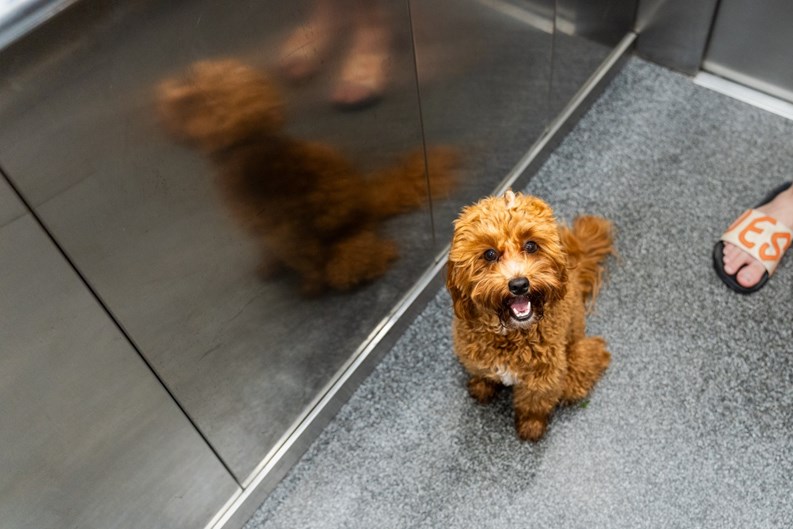
Keep dogs on a short, fixed leash (not a retractable lead) in lobbies, hallways, and elevators. Many common areas are tight, high-traffic spaces, and a retractable lead gives a pet enough slack to approach neighbors unexpectedly, which can terrify allergic residents, small children, and people with a phobia of dogs. Additionally, elevator doors can close on long leashes, creating severe safety risks for your pup.
When an elevator door opens, step back, keep your dog by your heel, and ask waiting neighbors if they are comfortable riding together before stepping inside.
Manage Noise Proactively
Acoustic noise (like sharp barking) and impact noise (like heavy paws or bouncing bone toys) travel easily through multifamily building structures, and if unchecked, directly degrade your neighbors' quality of life. This inevitably leads to formal complaints about your noisy pet to the board, which can result in hefty fines, or even having your pet evicted from the building.
Address excessive barking immediately through crate training and/or calming products recommended by your vet to reduce your pet’s separation anxiety. Use area rugs with thick underlayment pads over hard flooring to buffer the sound of late-night ‘zoomies’, and avoid throwing hard toys across uncarpeted floors during quiet hours.
Clean Up Immediately—Indoors and Out
Even the best-trained pet can have an accident. If your pet experiences an accidental elimination in a hallway, elevator, or lobby, clean it up right away using proper disinfectant, and report it to building staff—don’t just leave it for the janitorial team to discover.
Always carry waste bags, and clean up after your pet immediately on building grounds. Prompt waste disposal prevents hygiene hazards, unpleasant odors, aesthetic damage to common areas, and resentment among residents.
Practice Courteous Potty Habits
The nitrogen and salts in dog urine scorch grass, damage—and will eventually kill—expensive landscaping, and degrade masonry near building entryways. Concentrating waste right outside the front door creates foul odors where residents enter and exit daily, so guide your pet toward the street curb or designated relief areas away from building entrances, landscaped garden beds, decorative planters, and lawn spaces.
Respect House Rules & Size/Breed Restrictions
Co-op and condo house rules, including those governing pets, exist to preserve safety and resident comfort, and to uphold the building or HOA’s liability and insurance requirements. In addition to being just plain rude, ignoring pet rules damages trust with the board and management, and risks stricter restrictions being put on all pet owners in the building. Register all pets with management if required, follow designated pet entry/exit routes into and out of your building, and abide by breed restrictions and caps on the number or size of animals allowed.
Don’t Assume Your Dog is Everyone’s Best Friend
You might know your dog is friendly, but not everyone knows–or cares to know. Some residents may be afraid of dogs, allergic, or just prefer some distance. Never allow your dog to approach another resident without an invitation. Children, older residents, and those with limited mobility can easily be knocked off balance by an overeager greeting from your pup.
Similarly, not every dog is open to or interested in socializing. While your dog may be dog-friendly, it can be unsafe (for you, your pup, and others) to assume that every dog is. If you’re not familiar with a dog or resident you are approaching, give them some space. Ask before allowing your dog to greet someone, and respect their boundaries to minimize stress all round.





Comments
Leave a Comment